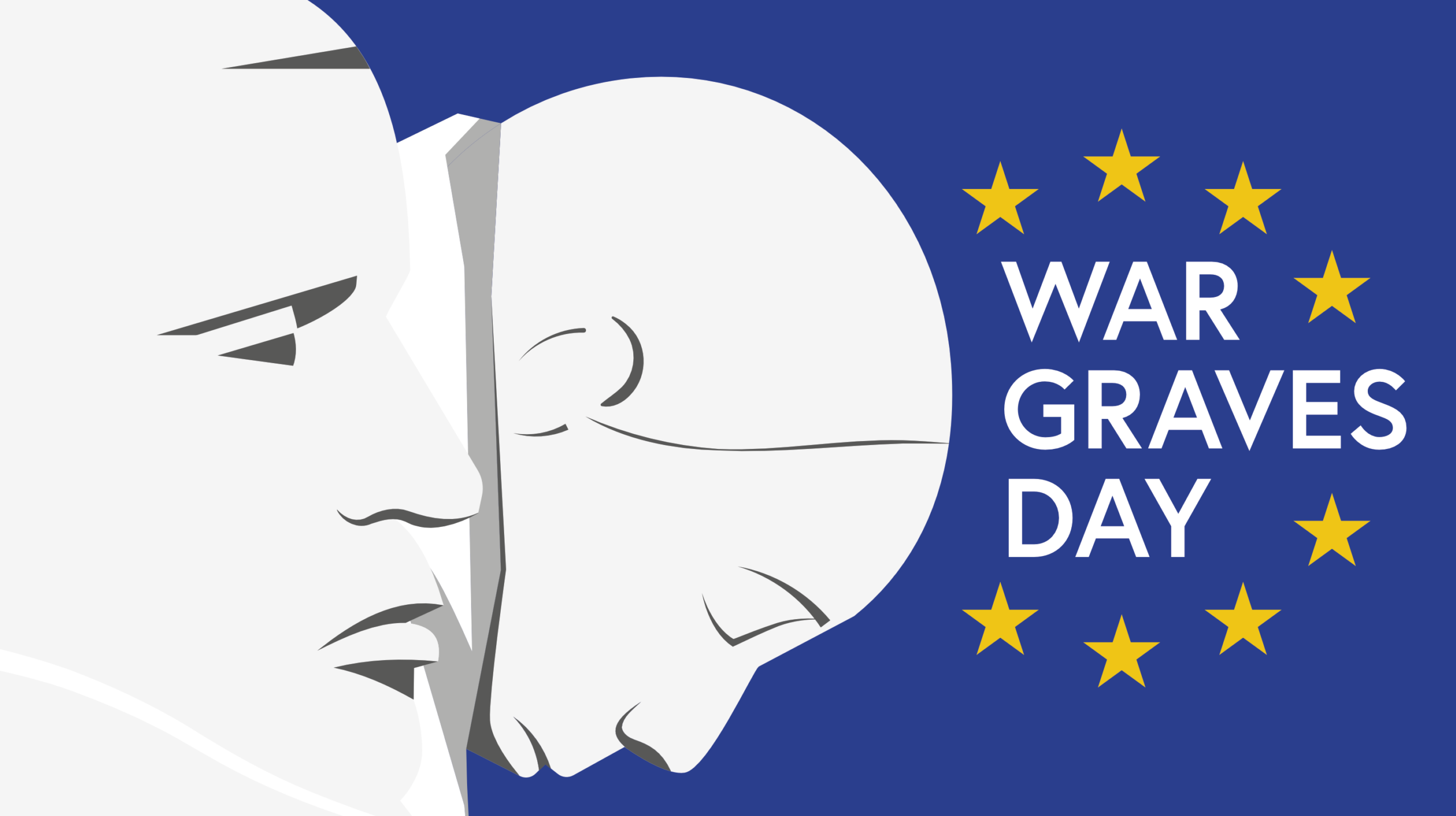

May 10 — War Graves Day
Build bridges. Preserve memory. Strive for peace.
What is War Graves Day
Every May 10, school classes across Europe visit war cemeteries in neighboring countries — or open their doors to visiting classes from abroad. Together, they care for the graves, learn the stories, and carry the memory forward.
War Graves Day is not about heroism or glory. It is about understanding — the scale of what was lost, and the responsibility that falls on every generation to make sure it is never repeated.
Why May 10
May 10 sits at a meaningful crossroads in the European calendar.
It falls the day after Europe Day (May 9), which marks the Schuman Declaration and the beginning of the project that has kept European nations at peace for over seven decades. It falls close to the anniversaries of the end of the Second World War in Europe. And it overlaps with the CWGC’s War Graves Week — an initiative we see not as a rival, but as a neighbor and a gateway.
The date is a reminder that peace is not automatic. It was built. It has to be maintained.
Why Now
The last veterans are gone. The last people with a direct personal memory of these wars are leaving us. As they go, the war cemeteries they kept alive with their presence — and their donations — risk becoming places nobody visits, nobody notices, and nobody fights to preserve.
Across Europe, hundreds of thousands of soldiers are buried far from home, in the countries they fought in or against. German soldiers in the Netherlands. British soldiers in Belgium. French soldiers in Germany. Their graves mark the places where Europe nearly destroyed itself — and where it chose, eventually, not to.
These places deserve to stay open. They deserve visitors. And the students who visit them today are the citizens, policymakers, and voters of tomorrow.
How It Works
For school classes:
Organize a trip to a war cemetery in a neighboring country, or host a visiting class from abroad. Activities can include guided visits, grave maintenance, research projects, and shared reflection. We connect interested schools and provide resources to help.
For individuals and organizations:
Follow the project, spread the word, and join the conversation around May 10 each year. Download and share our multilingual awareness posters. Help us grow the network.